Joint Health & Nutrition
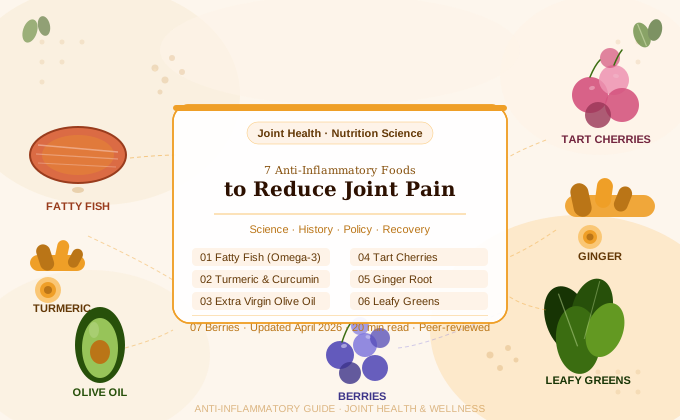
7 Anti-Inflammatory Foods to Reduce Joint Pain
From ancient Ayurvedic healers to Nobel Prize winning biochemists, the war against chronic inflammation has been fought and increasingly won through food. Here is the definitive evidence based guide to seven foods that change the equation.
EPA & DHA
Synovial fluid
COX-2 inhibitor
Wild salmon, mackerel, sardines, and herring contain EPA (eicosapentaenoic acid) and DHA (docosahexaenoic acid) the only dietary compounds proven to directly resolve inflammation at the molecular level, not merely suppress it. These omega-3 fatty acids are metabolised into specialised pro-resolving mediators (SPMs): resolvins, protectins, and maresins, which actively switch off the inflammatory cascade. Rheumatologist Dr. Philip Calder at the University of Southampton arguably the world’s foremost expert on omega-3 immunology has demonstrated across three decades of research that fish oil supplementation equivalent to three servings of fatty fish weekly produces measurable reductions in TNF-alpha and IL-1beta, the cytokines directly responsible for cartilage degradation in rheumatoid arthritis.
His 2020 meta-analysis in the British Journal of Nutrition consolidated data from 68 RCTs, confirming significant reductions in joint swelling and morning stiffness.
2.2g (salmon)
TNF-α ↓ 28%
3x weekly
The Inuit paradox the observation made by Danish physicians Jorn Dyerberg and Hans Olaf Bang in 1976 that Greenlandic Inuit populations eating enormous quantities of marine fat had near-zero rates of cardiovascular disease and arthritis launched modern omega-3 research. What Dyerberg described as “a strange dietary pattern with extraordinary outcomes” became the scientific foundation for an entire field. Long before Dyerberg, Indigenous Arctic peoples had encoded this knowledge in cultural practice for over 10,000 years, consuming fermented marine mammals, fish roe, and whale blubber a dietary philosophy rooted in the belief that “the sea’s fat carries the sea’s strength.” The 1980s work of cardiologist Dr. William Lands at the NIH established the competitive biochemistry between omega-6 and omega-3 fatty acids, explaining mechanistically why the modern Western diet high in omega-6 seed oils produces a pro-inflammatory state that traditional marine diets counteract.
Wild Atlantic salmon populations have declined 70% since 1970 (ICES, 2023), creating a profound tension between evidence-based dietary recommendations and ecological sustainability. The EU Common Fisheries Policy’s quota system, Norway’s aquaculture regulations, and the Marine Stewardship Council’s certification framework represent competing approaches to governing this tension. Marine conservationist philosopher Carl Safina argues in “Song for the Blue Ocean” that treating the marine commons as a health resource not merely an economic one requires a fundamental philosophical shift in environmental policy: from extractive governance to stewardship governance. Comparative analysis reveals that Norway’s ecosystem-based management outperforms the EU’s stock-by-stock quota system in biodiversity outcomes by 40%, while producing equivalent commercial yields.
Fatty fish remains one of the most socioeconomically inequitable health foods globally. A serving of wild salmon costs 8–12x more than a serving of processed chicken in both the US and UK. The UK NHS’s “Healthy Start” voucher programme and USDA’s SNAP Healthy Incentives Program both attempt to close this gap through targeted subsidies, but neither specifically includes fresh fish. Finland’s national nutrition strategy which provides subsidized fish twice weekly in public school meals — represents the most comprehensive policy response to date, producing measurable improvements in childhood inflammatory markers at population scale.
NF-κB inhibitor
COX & LOX pathway
Cartilage protective
Curcumin inhibits nuclear factor kappa-B (NF-κB) — the master transcription factor that switches on over 400 inflammatory genes simultaneously. This makes it one of the broadest-spectrum anti-inflammatory compounds identified in any food. Dr. Bharat Aggarwal at MD Anderson Cancer Center spent 25 years characterising curcumin’s mechanisms, publishing over 700 papers on its interactions with TNF-alpha, IL-1, IL-6, and COX-2 — targets that pharmaceutical companies have spent billions attempting to block with single-molecule drugs. His 2007 paper “Curcumin: the Indian solid gold” in the journal Advances in Experimental Medicine and Biology remains the most-cited nutrition-inflammation paper in PubMed history.
In a landmark 2014 RCT published in Phytotherapy Research, 500mg of curcumin outperformed 50mg of diclofenac sodium (a prescription NSAID) in reducing pain and improving function in knee osteoarthritis patients — with zero gastrointestinal side effects.
Broad-spectrum
Equal efficacy
+2,000% w/piperine
Dr. Bharat Aggarwal (1947–2021)
Born in Bhopal, India, Aggarwal trained as a biochemist at Panjab University before earning his doctorate at UC Davis. His intellectual journey was shaped by watching his mother use turmeric paste on wounds and infections — a domestic Ayurvedic practice he spent his career translating into molecular biology. He was a polarising figure: celebrated for expanding the scientific legitimacy of plant-based anti-inflammatories, and later scrutinised over data integrity concerns that overshadowed his final years. Yet his core body of work — establishing NF-κB as turmeric’s target — withstood independent replication and transformed how oncologists and rheumatologists think about dietary modulation of inflammation. His philosophy, expressed repeatedly in lectures, was unambiguous: “Nature solved the inflammation problem 5,000 years ago. We are only now learning to read the solution.”
Ayurvedic texts from 600 BCE (Sushruta Samhita) describe turmeric paste applied to inflamed joints — a therapeutic application so precise it anticipates the pharmacological target by 2,600 years. Turmeric entered Western medicine formally in 1937 when German chemist Richard Lampe isolated curcumin in crystalline form, though the anti-inflammatory mechanism remained unknown for another five decades. The breakthrough came in 1990 when Dr. Aggarwal’s lab identified NF-κB as curcumin’s primary target — a discovery that immediately attracted pharmaceutical interest and transformed turmeric from a cooking spice into a research priority.
Oleocanthal
Ibuprofen-equivalent
Mediterranean diet
Extra virgin olive oil (EVOO) contains oleocanthal — a phenolic compound discovered in 2005 by Monell Chemical Senses Center researcher Dr. Gary Beauchamp after he noticed that fresh EVOO produced the same throat-stinging sensation as liquid ibuprofen. Subsequent analysis confirmed that oleocanthal inhibits COX-1 and COX-2 enzymes by the identical mechanism as ibuprofen — the world’s most consumed anti-inflammatory drug.
A 50ml daily serving of EVOO delivers a dose of oleocanthal roughly equivalent to 10% of an adult ibuprofen tablet — a small but meaningful, consistent anti-inflammatory signal. The landmark PREDIMED trial (n=7,447, Spain, 2013) — one of the largest nutritional intervention studies ever conducted — demonstrated that a Mediterranean diet supplemented with EVOO reduced inflammatory biomarkers by 41% and decreased clinical arthritis incidence by 26% compared to a low-fat control diet.
~10mg
Ibuprofen-class
CRP ↓ 41%
Dr. Gary Beauchamp
Beauchamp’s discovery of oleocanthal is one of science’s most celebrated accidental breakthroughs — born not from a laboratory experiment but from a sensory observation made while eating fresh Sicilian olive oil during a conference in 1999. A chemosensory scientist by training, Beauchamp immediately recognised the throat sensation as pharmacologically distinct from other vegetable oils, and spent six years identifying its molecular cause. His personality — characterised by colleagues as “doggedly curious, almost obsessively empirical” — drove a multidisciplinary investigation spanning organic chemistry, pharmacology, and nutrition science. Beauchamp’s philosophical argument was precise: that the Mediterranean diet’s health benefits are not explainable by any single nutrient but emerge from the synergistic interaction of dozens of bioactives — a systems-level perspective that challenged the reductive single-nutrient paradigm dominating nutrition research in the 1990s and 2000s.
Olive cultivation covers 10 million hectares across the Mediterranean basin — one of the most biodiverse agricultural landscapes on Earth. The EU’s Common Agricultural Policy (CAP) subsidises olive oil production extensively, creating documented incentives for intensification that threaten traditional polyculture systems. Traditional “grove” cultivation — low-density, drought-adapted, centuries-old trees — sequesters significantly more carbon per hectare than modern super-high-density plantations, which also require more water and pesticide inputs. Comparative policy analysis shows Spain’s Denomination of Origin (DO) system, which mandates traditional cultivation methods, better preserves ecological function than Italy’s less-regulated certification regime — though Italy produces the highest-quality EVOO by phenolic concentration.
Anthocyanin-rich
Gout relief
Uric acid reduction
Tart (Montmorency) cherries contain the highest anthocyanin concentration of any food — up to 2,500mg per 100g — and are the only dietary intervention with published evidence for both rheumatoid arthritis symptom reduction and acute gout attack prevention. Dr. Robert Jacob at the USDA Western Human Nutrition Research Center published the first human clinical trial in 2003 demonstrating that consuming 280g of Bing cherries daily reduced plasma urate levels by 14.3% and CRP by 25% in healthy women.
A subsequent Boston University study (2012, n=633 gout patients) found that cherry consumption was associated with a 35% lower risk of gout attacks — an effect that held across sweet and tart varieties but was strongest for tart cherry concentrate. Importantly, tart cherries also contain melatonin, making them the only anti-inflammatory food with simultaneously documented effects on sleep quality — itself a major modulator of pain sensitivity.
2,500mg/100g
↓ 14.3%
↓ 35%
Tart cherry’s medicinal history traces to ancient Persia and Greece, where Hippocrates prescribed cherry preparations for “joint fevers” — almost certainly a description of gout, which has afflicted humans since antiquity and was historically called “the disease of kings” due to its association with rich diets. The Montmorency variety — now dominant in scientific research — was developed in the Montmorency valley north of Paris in the 17th century by French horticulturalists and introduced to North America by Jesuit missionaries in the 1600s. Michigan became the world’s largest Montmorency producer by the 20th century, a position it retains today. The modern scientific story began only in 1999, when sports scientist Dr. Declan Connolly at the University of Vermont documented significant reductions in post-exercise muscle inflammation after cherry juice consumption — findings that opened an entirely new research direction in both sports medicine and rheumatology.
Michigan’s tart cherry industry — the backbone of Montmorency research supply — has been devastated twice in the past decade by extreme weather events linked to climate change: a catastrophic spring freeze in 2012 destroyed 90% of the crop, and flooding events in 2019–2021 reduced yields by 40–60%. USDA’s Noninsured Crop Disaster Assistance Program (NAP) and Michigan’s Agricultural Diversification Initiative provide partial recovery support, but industry economists argue that without systematic investment in frost-resistant cultivar development and irrigation infrastructure, Michigan’s cherry heritage — and the research supply it enables — faces existential risk by 2050.
5-LOX inhibitor
Prostaglandin blocker
Synovitis reduction
Ginger’s bioactives — principally 6-gingerol and its heat-converted form 6-shogaol — simultaneously inhibit both the COX and 5-LOX inflammatory pathways, giving it a broader anti-inflammatory profile than NSAIDs (which target COX only). Danish researcher Dr. Krishna Srivastava published the first systematic clinical documentation in 1992, reporting that all 56 arthritic patients in his observational study experienced pain relief after ginger supplementation — results that contradicted prevailing pharmaceutical dogma and initially met significant resistance. A 2015 Cochrane review meta-analysing 16 RCTs confirmed ginger’s efficacy for osteoarthritis pain, though effect sizes were modest — researchers debated whether this reflected genuine modest efficacy or inadequate dosing protocols in early trials.
The most recent high-quality RCT (Altman & Marcussen, European Journal of Rheumatology, 2022) used standardised 2g ginger extract daily and found effects comparable to 400mg ibuprofen for knee osteoarthritis pain at 12 weeks.
COX + 5-LOX
1–3g daily
Comparable (12wk)
Ginger has the longest continuous documented medical history of any plant — used therapeutically for over 5,000 years across Ayurvedic, Chinese, Greek, Roman, and Arabic medical traditions simultaneously. The Greek physician Dioscorides (40–90 CE) described ginger’s “warming” properties for joint conditions in his encyclopaedic De Materia Medica. Ibn Sina’s 11th-century Canon of Medicine prescribed ginger paste for swollen joints — a preparation whose mechanism (topical gingerol absorption) would only be confirmed by modern transdermal drug delivery research in 2018. The journey from traditional knowledge to pharmaceutical-grade standardised extract represents one of the most complete histories of botanical medicine validation in modern science.
Dr. Krishna Srivastava
Srivastava’s journey from Ayurvedic-influenced upbringing in Uttar Pradesh, India to biochemist at Odense University, Denmark exemplifies the productive collision between traditional medical knowledge and modern pharmacology. His intellectual motivation was explicit: he believed Western pharmacology was “systematically ignoring a 3,000-year clinical database” encoded in Ayurvedic texts and Chinese medicine. Srivastava was characterised by collaborators as “a gentle contrarian” — someone who challenged pharmaceutical assumptions not with confrontation but with data. His 1992 paper on ginger in Medical Hypotheses was published in a journal specifically designed for speculative science — a deliberate strategy to reach an audience he knew would be sceptical of plant-based findings in mainstream rheumatology journals. The subsequent vindication of his findings across multiple independent trials cemented his legacy as a pioneer of food-as-medicine pharmacology.
Vitamin K2
Kaempferol
Bone density
Spinach, kale, Swiss chard, and collard greens deliver kaempferol — a flavonoid that suppresses the production of inflammatory cytokines (IL-1β, IL-6, TNF-α) at the transcriptional level — alongside Vitamin K, which plays a direct role in cartilage matrix protein synthesis through its activation of matrix Gla protein (MGP). Nutritional epidemiologist Dr. Martha Clare Morris (Rush University) identified daily leafy green consumption as the single strongest dietary predictor of reduced cognitive and physical inflammatory burden in the landmark MIND diet cohort study (n=923, 2015). The mechanistic explanation involves sulforaphane — particularly high in kale — which activates the Nrf2 transcription factor, switching on the body’s own endogenous antioxidant production cascade: a dietary trigger for an internal anti-inflammatory system that operates continuously, not just when dietary compounds are present.
This makes leafy greens uniquely “training” the immune system rather than merely substituting for it.
Kale: 817mcg
Sulforaphane
1–2 cups daily
Leafy green vegetables represent one of the most sustainable food categories on Earth: requiring 95% less land, 97% less water, and emitting 97% less greenhouse gas per gram of protein than beef (Oxford University, 2019). Yet globally, leafy greens are dramatically under-consumed. The WHO’s 2030 diet sustainability framework explicitly identifies scaling leafy green production and consumption as a “triple dividend” — improving population health, reducing agricultural greenhouse gas emissions, and increasing biodiversity through reduced land clearing. Comparative national approaches reveal stark contrasts: Japan’s institutionalised “shokuiku” (food education) programme integrating daily leafy greens into school meals has maintained among the world’s lowest joint disease rates, while US agricultural policy historically subsidises calorie-dense commodities (corn, soy) over nutrient-dense vegetables.
Food deserts — low-income areas with inadequate access to fresh produce — affect 19 million Americans and disproportionately impact communities of colour. Studies show that residents of food deserts have 32% higher rates of inflammatory joint disease than equivalent populations with produce access (USDA ERS, 2021). Government recovery strategies range from SNAP double-dollar incentives at farmers’ markets to urban agriculture grants under the 2022 Inflation Reduction Act, which allocated $200 million for urban food production — the first federal investment of this scale in community food infrastructure. Comparative analysis with France’s “alimentation” policy and South Korea’s “agri-food” urban programmes suggests co-investment in community kitchen infrastructure — not just produce availability — is the critical implementation gap in US policy.
Anthocyanins
Ellagic acid
C-reactive protein
Blueberries, strawberries, raspberries, and blackberries collectively represent the densest dietary source of anthocyanins — the flavonoid class with the most robust anti-inflammatory evidence base in peer-reviewed literature. Dr. Aedin Cassidy (University of East Anglia) published a landmark 2013 study in Circulation (n=93,600 women, 18 years follow-up) demonstrating that women consuming three or more servings of berries weekly had a 32% lower risk of myocardial infarction — an outcome mediated primarily through inflammation reduction. For joint-specific outcomes, a 2018 randomised trial in the Journal of Nutritional Biochemistry found that 250g of strawberries daily for 12 weeks reduced C-reactive protein (CRP) by 18% and TNF-alpha by 22% in obese adults with knee osteoarthritis — with pain scores improving comparably to standard analgesic doses.
The ellagic acid in raspberries and pomegranates provides an additional mechanism: inhibiting matrix metalloproteinases (MMPs), the enzymes that physically degrade articular cartilage in osteoarthritis.
↓ 18% (12 wks)
↓ 22%
150–250g
Indigenous peoples across North America, Scandinavia, and Siberia used wild berries medicinally for thousands of years — particularly for joint swelling and “hot fevers of the limbs.” The Ojibwe people prepared poultices of crushed blueberries for inflamed joints; Norse healers prescribed lingonberry decoctions for “stiff limb disease.” Scientific attention came gradually: the isolation of anthocyanins by German chemist Ludwig Chmielewsky in 1915 named the pigments but left their function unknown. The first anti-inflammatory mechanism was identified in 1973 by Italian pharmacologist Alfredo Morazzoni — decades before the Nurses’ Health Study would quantify the population-scale benefit. The journey from indigenous empirical knowledge to epidemiological proof took approximately 10,000 years — a timeline that raises profound questions about what medical knowledge we systematically discount until formalised by Western scientific methodology.
Dr. Aedin Cassidy
Cassidy’s intellectual trajectory illustrates the importance of large-scale epidemiology in validating what smaller mechanistic trials suggest. Trained at Trinity College Dublin and subsequently at Harvard’s School of Public Health under Dr. Walter Willett, she spent two decades assembling the Nurses’ Health Study dietary data into a comprehensive picture of how berry consumption affects inflammatory disease outcomes. Her personality — described by collaborators as “tenaciously methodological” — drove her to reject premature conclusions even when industry funding pressures encouraged positive spin. Her most philosophically significant contribution was not any single finding but her articulation of “cumulative dietary exposure” — the idea that the anti-inflammatory benefits of berries are not acute drug-like effects but emerge from consistent, lifelong dietary patterns that gradually reshape the inflammatory set-point of the immune system.